AC Repair Help for Philadelphia Homeowners
Request an estimate before work starts
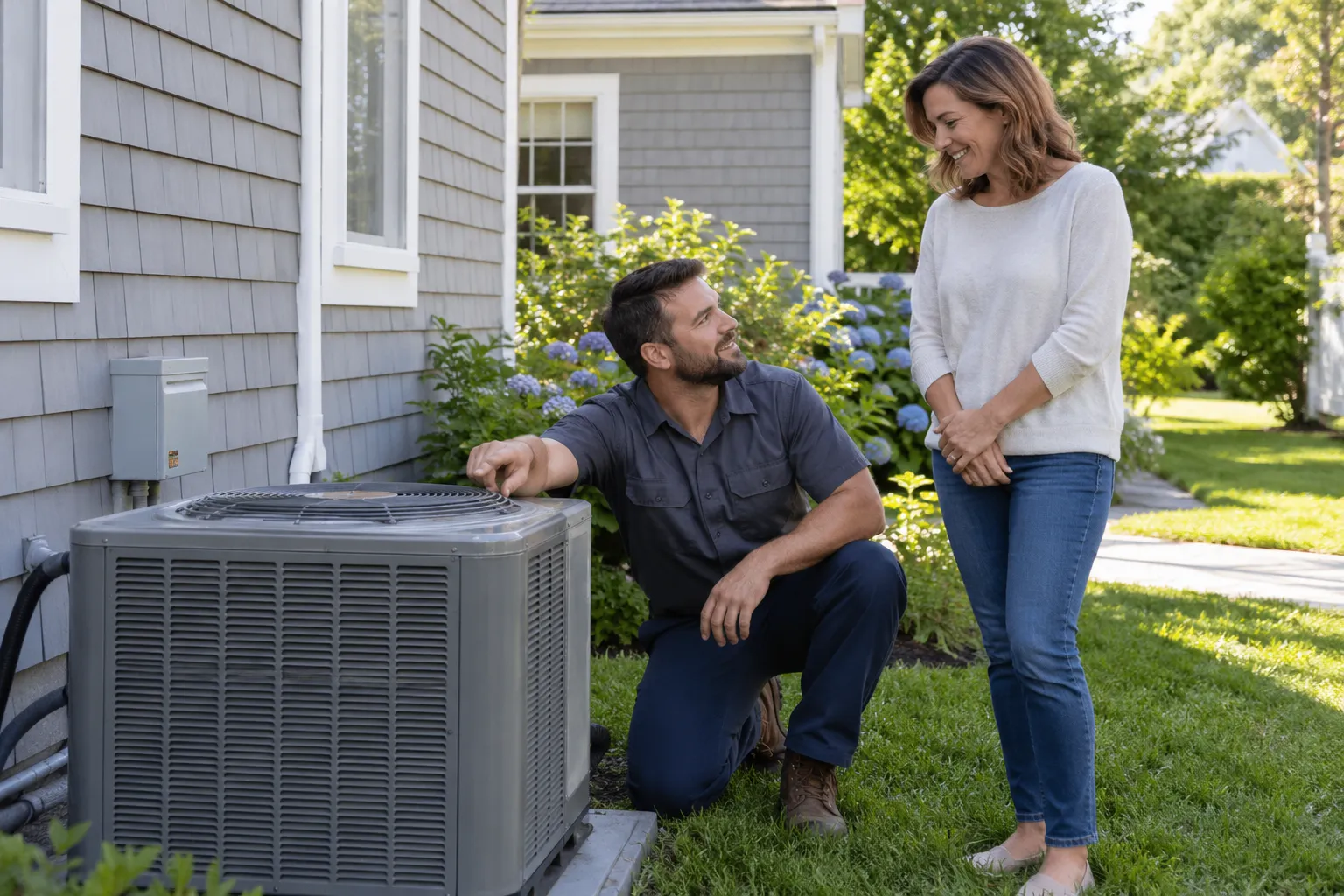
A warm house is stressful, and it is hard to think clearly when the air feels heavy. Connectionsjapan Heating & Air is a referral service, so we do not do the work ourselves. We help you sort out what might be wrong and what your choices are.
From there, you can request an estimate. A local provider in our network can look at the system, explain the likely next steps in plain words, and put the price in writing before anything starts. You stay in charge the whole way. You can ask questions, compare options, and take the time you need. Whether it is a weak airflow problem, a noisy outdoor unit, or an AC that will not turn on, you do not have to guess alone.
AC stopped cooling? Start here
Take a slow breath. Many cooling problems feel bigger than they are, and a few quick checks can tell you a lot.
- Check the thermostat. Make sure it is set to cool and the target is below the room reading.
- Look at the breaker panel. A tripped breaker for the outdoor unit or air handler is common.
- Check the air filter. A clogged one can choke airflow.
- Step outside. Is the outdoor unit humming, or is it silent?
If none of that helps, you now have useful notes to share with a provider.
When it feels like an emergency
Emergency AC repair usually means a hot home with someone at risk, like a baby, an older relative, or a person with a health condition. If that is you, say so when you reach out. Request a callback to check provider availability. Many providers can respond quickly, though timing depends on the season and the day.
Until then, close the blinds, run fans, and settle in the coolest room. In many older homes, that is the basement.
Switch it off if you notice these
Some signs mean the system should rest until someone looks at it.
- Ice on the refrigerant line or indoor coil
- Water pooling near the indoor unit
- A burning smell or loud buzzing from outside
- A breaker that trips again right after you reset it
Running a struggling system can turn a small repair into a big one. Turn it off at the thermostat and ask a provider what to do next.
Early signs most people miss
AC trouble usually whispers before it shouts. Watch for these:
- Some rooms stay warmer than others
- Air from the vents feels weak or only lukewarm
- The system runs longer than it used to
- Rattling, squealing, or clicking sounds
- A musty smell when the air comes on
- A sticky, damp feeling indoors
- Bills that climb with no change in habits
Acting on one of these in spring is much calmer than acting during a heat wave.
What winter can leave behind
Cold, snowy winters and freeze-thaw swings are hard on outdoor equipment. The unit can shift on its pad, gather leaves and ice, or get bent fins from a snow slide. Take a look before the first hot week. If something seems off, a provider can check it early.
What happens during a repair visit
A good visit follows a simple path. The provider listens first, then checks the thermostat, power, airflow, coils, and the outdoor unit. They look at refrigerant levels, electrical parts, and the drain line.
Then they explain what they found in plain words. You should hear the likely cause, your choices, and the price before any work begins. That is the idea behind "Estimate before work."
Common AC repairs
Here are repairs homeowners hear about most often:
- Capacitor or contactor: small electrical parts that help the unit start.
- Fan motor: the outdoor fan stops or runs weakly.
- Refrigerant leak: a leak must be found and fixed, not just topped off.
- Frozen coil: often tied to airflow or low refrigerant.
- Clogged drain line: water backs up and can shut the system down.
- Thermostat trouble: the system gets the wrong message.
- Compressor problems: the largest repair, and the one that often leads to a replace-or-repair talk.
Older homes bring their own puzzles
Older housing stock can be tricky. Cape Cod style homes often have tight attic spaces or long duct runs. Stone and block foundations can make basement access narrow. Multi-family buildings may share walls, panels, or lines.
Mention your home type when you request an estimate. It helps the provider plan the visit and explain what might take extra time.
Repair or replace? Know your options
You usually have three paths: fix the problem now, fix it and plan for later, or replace the system. None is wrong. The right one depends on your situation.
Things that point toward repair:
- The system is fairly young
- The problem is a single, small part
- Past repairs have been rare
Things that point toward a bigger conversation:
- The system is well past 12 to 15 years old
- The repair cost is a large share of a new system
- Breakdowns keep coming back
- It uses an older refrigerant that is getting harder to find
Ask for both numbers in writing, then take your time.
Questions to ask the provider
Write these on your phone. They keep the visit relaxed.
- What do you think caused this?
- Is this a repair that should last, or a short-term fix?
- What are my other options?
- Is the estimate in writing, with parts and labor listed?
- Is there a warranty on the part or the work?
- What happens if you find a second problem?
Comparing estimates without stress
If you get more than one estimate, compare the same things. Look at the scope of work, the parts, the warranty terms, and the timing. A lower number may leave something out. A higher one may include more. Ask questions until it makes sense.
Getting ready for the visit
Clear a path to the indoor unit and the outdoor unit. Move boxes away from a basement air handler. Keep pets in another room. Note when the problem started and any sounds you heard. These small steps help the visit go smoothly.
Keeping it from happening again
Change filters on schedule. Keep plants and snow piles away from the outdoor unit. Keep vents open. Many homeowners also schedule a spring check-up before the heat arrives. It is one of the easiest ways to spot trouble early.
What's Included
Clear Diagnosis
A provider checks power, airflow, coils, and refrigerant, then explains what they found in plain words.
Written Estimate
You see the price and the plan before any work begins.
Repair Options
Hear your choices, from a simple part swap to a longer-term plan for the system.
Help with Next Steps
The provider explains what to expect after the repair and how to avoid repeat trouble.
Typical AC Repair Costs
Prices vary by home, brand, and the part involved. These are typical U.S. ranges, not quotes. A provider should look at your system and give you a written estimate before any work starts.
| Repair item | Typical range | Notes |
|---|---|---|
| Diagnostic visit | $75 – $200 | Often applied toward the repair if you go ahead |
| Capacitor or contactor | $120 – $450 | Small electrical parts, common wear items |
| Condenser fan motor | $400 – $900 | Price depends on motor type and access |
| Drain line clearing | $100 – $350 | Prevents water backup and shutdowns |
| Refrigerant leak repair | $200 – $1,600 | Varies with leak location and refrigerant type |
| Compressor replacement | $1,500 – $3,500 | Often leads to a repair-or-replace talk |
How It Works
Tell Us What Is Happening
Share what you notice, like warm air, strange sounds, or a unit that will not start.
Get Matched with a Provider
A local provider in our network reaches out to talk through your situation.
Review the Estimate
Read the written plan, ask questions, and compare your options.
Choose Your Next Step
Decide on the repair, a plan, or another path when you feel ready.
Why Call Connectionsjapan Heating & Air
Options First
You learn what your choices are before anyone starts work, so decisions feel calmer and clearer.
Local Providers
You are matched with independent providers who work in your area and know local homes.
Plain Language
Explanations stay simple, without jargon, so you know what is happening and why.
No Pressure
Request an estimate with no obligation, and take your time to decide.
Other Services
Need ac repair in Philadelphia?
Tell us what your system is doing. Request an estimate and a local provider in our network will follow up with next steps. No obligation.
No obligationAC Repair FAQ
Why is my AC running but not cooling the house?
Common causes include a dirty filter, a frozen coil, low refrigerant, or a failing outdoor part. Check the filter and thermostat first. If air is still warm, a provider can find the cause.
Should I turn off my AC if it is freezing up?
Yes. Switch the cooling off and let the ice melt, which can take hours. Running it while frozen can strain the compressor. A provider can check airflow and refrigerant.
How do I know if I should repair or replace my AC?
Consider the system's age, the repair cost, and how often it breaks down. Ask a provider for repair and replacement estimates in writing so you can compare them calmly.
Get in touch
Tell us what your system is doing. Request an estimate and a local provider in our network will follow up with next steps. No obligation.
No obligation